
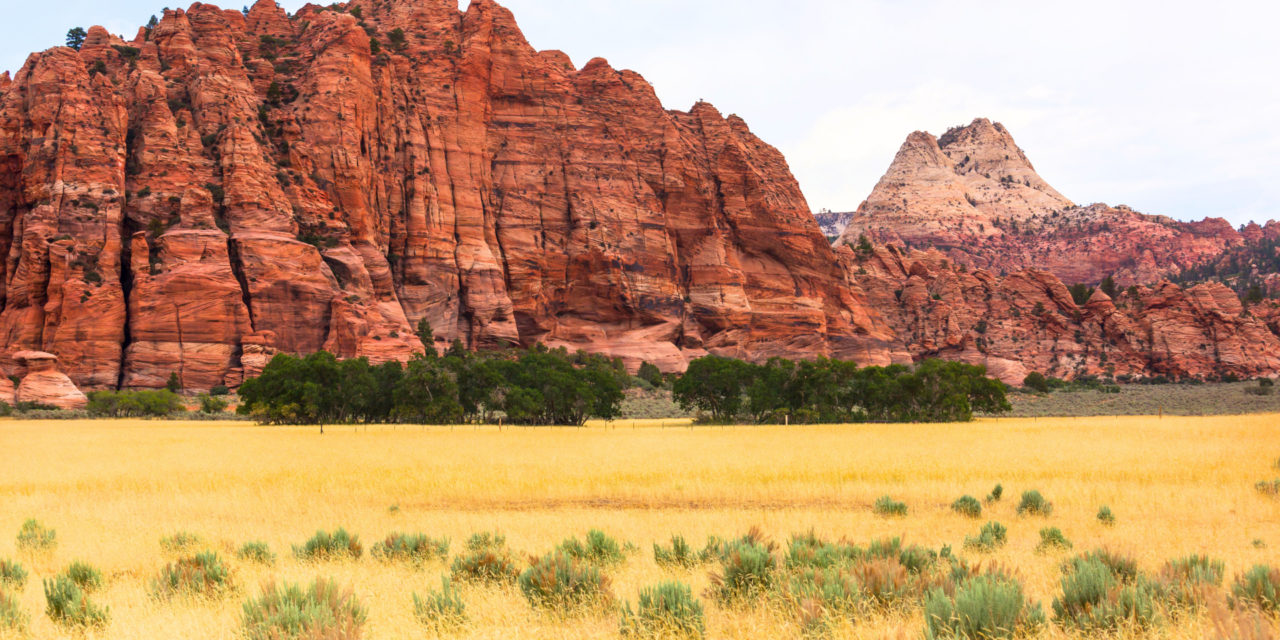
Camping near Zion National Park could soon get a lot harder.
The Bureau of Land Management is considering a plan to significantly scale back dispersed camping on public land along Utah’s State Route 9 corridor between Hurricane and Springdale. For years, that area has been a go-to backup for campers who couldn’t get a reservation inside the park or wanted to boondock nearby.
What the BLM Is Proposing?
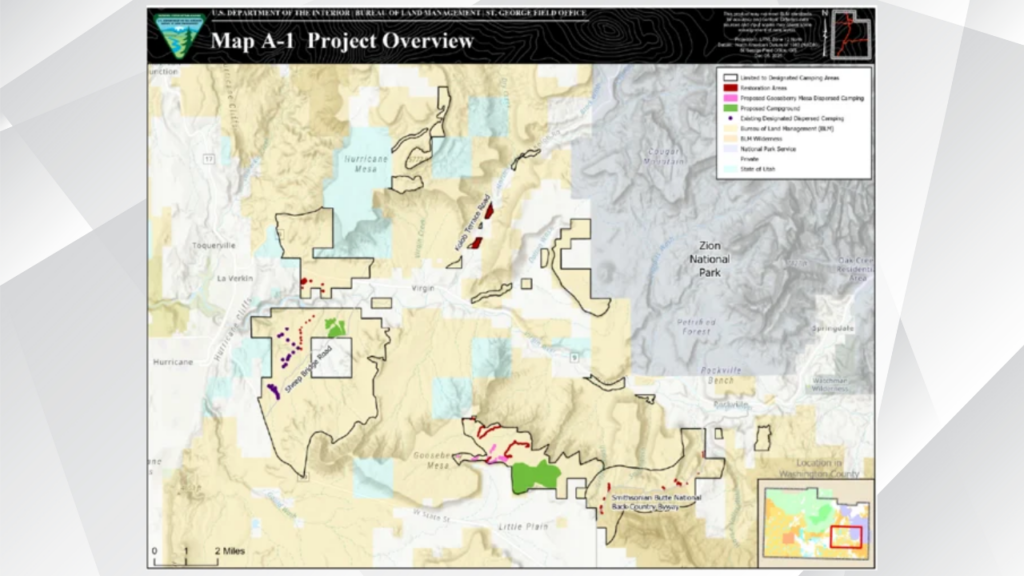
The BLM plan calls for two new campgrounds: one near the former Flagstone Quarry site with 150 campsites, and another on Gooseberry Mesa with 80 campsites. Together, that would create 230 fee-based sites with basic amenities like vault toilets, dumpsters, picnic tables, tent pads, shade structures, and fencing. The agency says one reason for using the former quarry is that it is already a disturbed site, which reduces the need to impact new land.
The proposal initially described the affected area as 15,087 acres. Recent coverage and BLM summaries describe it as nearly 14,000 acres, but either way, the change is substantial.
At the same time, dispersed camping would be cut back across a large stretch of public land near Zion. Only a limited number of designated dispersed sites would remain.
Not Everyone is On Board with This New Plan
For a lot of Zion visitors, dispersed camping has been the pressure-release valve.
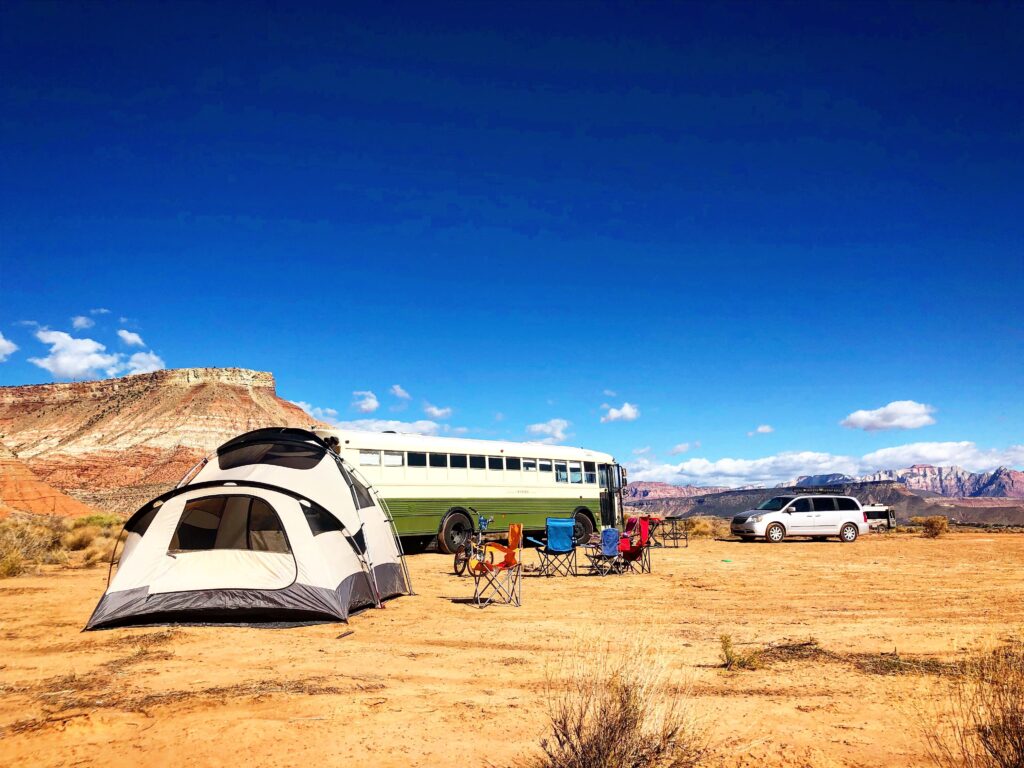
Zion is one of the busiest national parks in the country, and campground reservations inside the park are often hard to get during much of the year. When those sites fill up, these dispersed areas become places many campers rely on: Hurricane Cliffs, Gooseberry Mesa, and Smithsonian Butte, just to name a few. For years, campers have been able to pull off, find a legal spot, and stay for free—as long as they followed basic rules.
Why the Change?
The agency says the current level of use is no longer sustainable.
According to the BLM, years of heavy dispersed camping in the Zion gateway area have led to soil compaction, vegetation loss, trash, human waste issues, and a growing number of illegal fire rings.
The plan will concentrate camping in places that can better handle the impact, rather than allowing continued misuse across fragile desert terrain.
Supporters of the proposal say that kind of management is necessary to protect the area and ensure it is around for future generations to enjoy.
Why Some Oppose It
Critics argue that reducing dispersed camping around Zion is also a question of access and affordability. When developed campgrounds book out months in advance, free camping on nearby public land has often been one of the few remaining options for people who still want to visit without paying high campground or hotel prices.
From that perspective, cutting back dispersed camping could push some travelers farther out from the park — or out of the area altogether.
What Happens Next
The plan is now in its final stage, with an appeal deadline set for April 22nd. After that, the Interior Board of Land Appeals will decide whether it moves forward.







Leave a Reply
You must be logged in to post a comment.