
Bringing a kitchen with you is one of the best parts of RV travel. Whether you are grilling at the campsite, packing lunch for a day trip, or just grabbing some late-night snacks for the game table, it can get really easy, really fast to relax a little too much when it comes to food safety while camping.
And in hot weather, that can be a recipe for disaster.
The FDA says bacteria multiply quickly in summer temperatures, which is why food safety matters just as much at the campground as it does at home. A little extra care with coolers, raw meat, and serving food can help you avoid a vacation-ruining case of food poisoning.
So here’s a little food for thought (alright, I’ll stop with the puns) before you head off on your next RV adventure.
Prep Food Safely Before You Leave
A lot of food safety starts before you ever pull out of the driveway.
Defrost meat, poultry, and seafood in the refrigerator, in cold water, or in the microwave. If you thaw food in cold water or the microwave, it should be cooked right away. Marinate in the refrigerator, not on the counter. And if marinade has touched raw meat, do not reuse it unless you boil it first.
It is also smart to wash produce before your trip, especially anything you plan to eat raw. The FDA recommends rinsing fresh fruits and vegetables under running water before packing them, even if you plan to peel them later.
If your picnic area or campsite will not have easy access to running water, bring what you need to clean hands and surfaces. A water jug, soap, paper towels, or moist disposable wipes can go a long way. And do not forget a food thermometer. It is one of the easiest tools for making sure dinner is actually safe to eat.
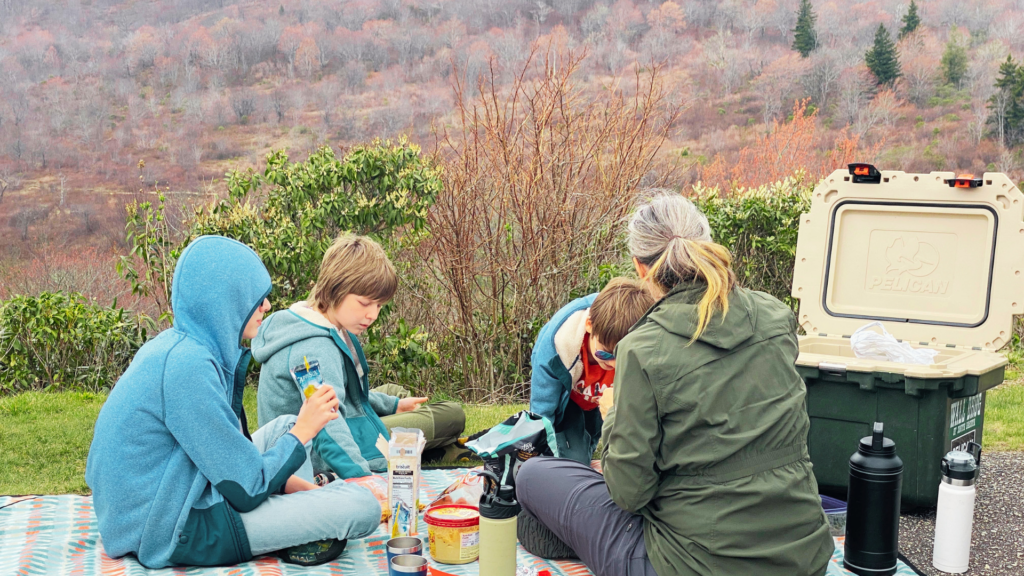
Pack Coolers the Right Way
When it is time to load up, keep cold food cold from the start.
The FDA recommends putting refrigerated food straight into an insulated cooler with plenty of ice or frozen gel packs and keeping perishable foods at 40°F or below. If possible, pack drinks in a separate cooler so the food cooler is not opened every few minutes.
Raw meat, poultry, and seafood should be wrapped securely and kept where juices cannot drip onto ready-to-eat foods. In an RV cooler or campground fridge, that usually means storing raw meat low and keeping produce, condiments, and prepared foods above it.
One more smart tip for travel days: keep the cooler in the air-conditioned passenger area instead of a hot trunk or truck bed whenever possible. USDA guidance emphasizes traveling with plenty of ice or another cold source so food stays out of the temperature “danger zone.”
Be Careful at the Grill
Grilling is where food-safety mistakes tend to happen fast.
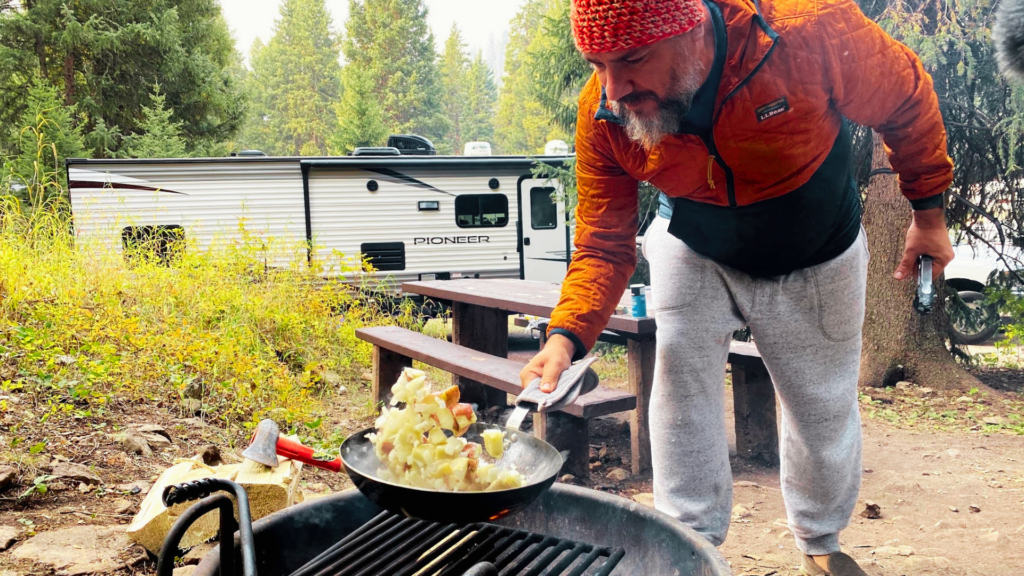
Bring clean platters and clean utensils to the grill so cooked food never goes back onto a surface that held raw meat. That includes tongs, forks, trays, and cutting boards. Cross-contamination is one of the easiest ways to turn a great campsite dinner into a rough night.
And do not guess on doneness. Use a food thermometer.
USDA’s current safe minimum internal temperature chart says poultry should reach 165°F, ground meats 160°F, and fish, pork, steaks, chops, and roasts generally 145°F, followed by the appropriate rest time where required.
If food comes off the grill before everyone is ready to eat, keep it hot at 140°F or above until serving. The FDA notes that moving food to the side of the grill can help keep it warm without overcooking it.
Watch the Clock Once Food Is Served
Perishable food should not stay in the temperature “danger zone” between 40°F and 140°F for more than 2 hours. If the outdoor temperature is above 90°F, that window drops to just 1 hour. After that, the safest move is to throw it out.
That rule applies to both hot and cold foods. Potato salad on the picnic table, burger patties sitting out after lunch, sliced fruit in the sun, or leftovers from a cookout all count. If something has been sitting out too long, it is not worth risking the rest of your trip.
A Little Caution Goes a Long Way
Nobody wants food poisoning to be the thing they remember about a camping trip.
A little planning, a well-packed cooler, a clean prep area, and a food thermometer can make a big difference. Summer camping is supposed to feel easygoing, but food safety is one place where it pays to stay sharp (ok, I had to get one more pun in).








Leave a Reply
You must be logged in to post a comment.